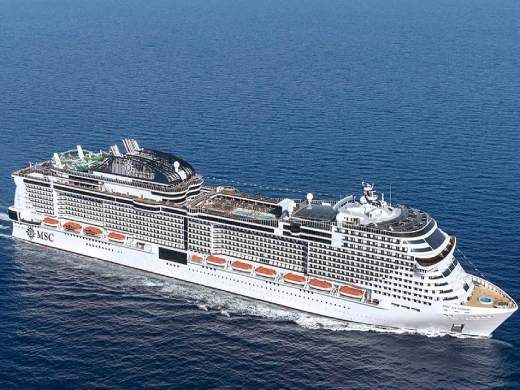
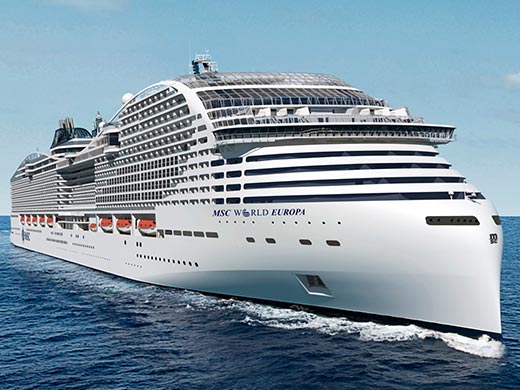
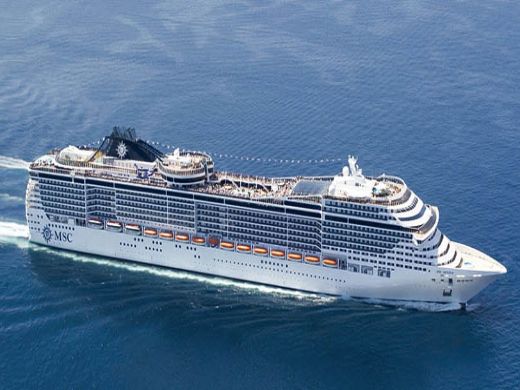
A cruise ship hull is the watertight steel outer shell that runs from bow to stern and from the waterline down to the keel it's the single structure that keeps a 200,000-ton vessel afloat, protects everything inside from the sea, and shapes how smoothly the ship rides through water. Modern cruise ships use a monohull displacement design: a wide, U-shaped hull that pushes aside a volume of water equal to the ship's own weight to create buoyancy.
Any structure built with hands or machines requires foundations. Foundations that touch upon, and weigh themselves over the surface of the earth, as a preliminary permission to exist as a structure itself. The hull has the same function, except that it floats above the earth, where water substitutes for air, and is the single most important part of any ship.
It is the body of the cruise ship kept afloat by a design structure that maintains buoyancy, protecting everything inside the ship from the sea water, and determines how efficiently (and comfortably) the ship moves through the water. It is cast and forged as a massive steel structure you see disappearing below the waterline, at the bottom. Its sides cut through waves, and support thousands of passengers, crew, pools, restaurants, theaters, and engines.
So, whenever someone asks, “what is a hull?”, you can comfortably answer. But, if you really want to know more, so that you can discourse on the modern cruise ship, it is pertinent to understand this most sophisticated piece of engineering on the planet a carefully shaped, multi-layered steel envelope that balances speed, stability, safety, fuel efficiency, and passenger comfort.
Let’s explore everything about the cruise ship hull: its definition, design, shape, materials, thickness, depth, underwater appearance, cleaning process, safety features (including double hulls), and related terms. All information is current as of 2025–2026, based on naval architecture sources, cruise industry reports, and technical data.
Key Takeaways
- The hull is the watertight steel body below the main deck that gives a ship buoyancy, strength, and hydrodynamic efficiency.
- Nearly all cruise ships use a monohull displacement hull wide, U-shaped, and stable not planing or multi-hull designs.
- Hull steel thickness ranges from about 12–25 mm on the sides to 35–40 mm in ice-strengthened bow sections.
- Typical draft (submerged hull depth) runs 25–35 feet, depending on ship size up to 35 feet on Icon-class ships.
- Most modern ships have a double bottom a second inner hull layer that adds a safety buffer if the outer hull is breached.
- Hulls are cleaned every 3–12 months in the water and fully dry-docked every 2–5 years.
What Exactly Is the Hull of a Cruise Ship?
The hull is the ship's main body the watertight outer structure that extends from the bow (the pointed front, sometimes called the "nose" of the ship) to the stern (rear), and from the uppermost continuous deck (the weather deck) down to the keel, the structural backbone running along the very bottom. In simple terms:
- The hull is everything below the main deck that's in contact with the water.
- It forms the bottom and curved sides that give the ship its characteristic shape.
- It provides buoyancy (by displacing water), structural strength, and hydrodynamic efficiency.
The hull is built from thousands of steel plates welded into a single seamless, watertight envelope. Unlike the upper decks built mainly for passengers the hull's job is to keep the ship afloat, absorb wave impacts, and carry the enormous weight above it: up to roughly 230,000 gross tons on the largest ships afloat today, like Royal Caribbean's Icon of the Seas.
What Type of Hull Do Cruise Ships Use?
Virtually all large cruise ships use a displacement hull: a design that pushes water aside as it moves forward, creating buoyancy equal to the ship's own weight. It's the only practical hull type for vessels this large and heavy. Other hull types exist but aren't used on mainstream cruise ships:
| Hull Type | Typical Use | Speed Profile | Used on Cruise Ships? |
|---|---|---|---|
| Displacement hull | Cruise ships, cargo ships, ferries | Moderate, fuel-efficient | Yes standard on all large cruise ships |
| Planing hull | Speedboats | Fast lifts and skims the surface | No impractical above a few hundred tons |
| Semi-displacement hull | Ferries, medium-speed craft | Hybrid speed and weight | No — not suited to megaships |
| Multi-hull (catamaran/trimaran) | Yachts, small expedition ships | Fast, very stable in calm water | Rare occasionally on small expedition vessels only |
Most cruise ships pair a monohull displacement design with a fine, sharp bow entry and a wide, relatively flat-bottomed midsection a shape chosen for stability and passenger comfort over raw speed.
Cruise Ship Hull Design and Shape
Hull shape is engineered for a balance of efficiency, stability, and seakeeping a process that determines whether a ship rides comfortably through rough water or struggles with it. Key design elements include:
Fine entry (bow): A sharply pointed bow with a bulbous protrusion below the waterline that cuts wave-making resistance by roughly 5–15%, improving fuel efficiency.
Deep V or U-shaped midsection: Most modern ships use a shallow-draft, rounded-bilge U-shape rather than a deep V, trading a slightly rougher ride for far more interior volume and stability.
Wide beam: Cruise ships run up to 215 feet wide on Icon-class vessels, with a nearly rectangular underwater cross-section that limits rolling to just a few degrees even in heavy weather one reason a well-designed hull helps reduce seasickness on a cruise. Fin stabilizers extend from the hull to reduce roll further; see how cruise ship stabilizers work for the full mechanics.
Flared bow and tumblehome: A flared bow tapers at the bottom and flares outward above the waterline to deflect spray; tumblehome curves the upper hull inward, wine-glass style, to cut wind resistance.
Keel: The heavy steel spine running the full length of the ship's bottom centerline, laid first during construction and providing the hull's longitudinal strength.
Below the waterline, the hull is coated in red or black antifouling paint to slow marine growth (barnacles, algae) that would otherwise increase drag.
How Thick is the Hull of a Cruise Ship?
Hull steel thickness varies by location on the ship and by function:
Bottom plating (keel area): 20–32 mm (0.8–1.25 in), built for strength and impact resistance.
Side shell plating: 12–25 mm (0.5–1 in), thinning higher up the hull where loads are lighter.
Bow and ice-strengthened areas: 35–40 mm, reinforced against ice impacts on ships that sail polar or near-ice routes.
Double bottom (inner layer): 10–15 mm, forming the second layer of a two-layer safety structure.
Modern steel is used for increasing thickness. It is high-strength (AH36/DH36 grade), allowing thinner plating than older ships (e.g., Titanic had 25–38 mm plates, but they were made of low carbon, mild steel with impurities in alloy). Double bottoms are very useful in adding redundancy; if the outer hull is breached, the inner layer ph2revents flooding.
How Deep Is a Cruise Ship's Hull?
"Draft" is the vertical distance from the waterline down to the lowest point of the keel in other words, how much of the hull sits underwater. Draft scales with a ship's size and tonnage:
Typical cruise ship draft: 25–35 feet (7.6–10.7 m)
Oasis-class (e.g., Oasis of the Seas): approximately 30–33 feet (9.1–10 m).
Icon-class: up to 35 feet.
Smaller ships (e.g., Azamara): 20–25 feet.
For scale on just how large today's hulls have to be, see our full breakdown of the largest cruise ships in the world.
What Does the Hull of a Cruise Ship Look Like Underwater?
If you are curious, you may dive into the water, where you’ll find that in the underwater (diver or ROV view), the cruise ship hull looks smooth, streamlined, and massive.
Key features of underwater hull includes:
Red or black antifouling paint: Bright red near the waterline, fading to black at depth, to slow algae and barnacle growth.
Bulbous bow: A large rounded bulb projecting forward below the waterline that reduces drag.
Propellers and rudders: Massive bronze propellers, up to 20 feet in diameter, mounted at the stern.
Stabilizer fins: Retractable wing-like fins amidship that extend to reduce rolling.
Sonar domes: Rounded protrusions, usually housed in the bulbous bow, used for depth-sounding and navigation on some vessels though most cruise ships don't rely on them; military vessels use them more extensively.
Intakes and discharges: Ballast water inlets and outlets. As fuel burns off, the ship gets lighter and sits higher in the water, so ballast tanks take on water to keep draft and stability consistent.
The hull is surprisingly clean on well-maintained ships, thanks to regular cleaning. Let’s look at how this is done.
How Do Cruise Lines Clean a Ship's Hull?
Hull cleaning matters for more than appearance barnacle buildup can increase water drag by 20–30%, adding millions of dollars in annual fuel costs. Cruise lines use a mix of methods:
Methods:
In-water hull cleaning: Divers or ROVs use robotic brushes or high-pressure water (no toxic chemicals) to strip off algae and barnacles, typically every 3–12 months in port./p>
Hull grooming: Light, proactive cleaning every 1–3 months to prevent heavy fouling before it starts, done in the water rather than dry dock.
Dry docking: TA full haul-out every 2–5 years for scraping, inspection, and repainting antifouling coatings typically last 3–5 years before they need renewal.
New technology: Robotic crawlers, ultrasonic systems, and non-toxic silicone-based paints are replacing older chemical antifoulants.
Regulations: IMO (International Maritime Organization) bans toxic paints.
Nowadays, major focus is on eco-friendly methods to protect marine life.
Frequently Asked Questions
What is a cruise ship hull made of?
Cruise ship hulls are built from thousands of welded high-strength steel plates (typically AH36/DH36 grade), ranging from 12 mm on the upper sides to 40 mm in ice-strengthened bow sections.
How thick is a cruise ship hull?
Side shell plating runs 12–25 mm thick, bottom plating 20–32 mm, and bow/ice-strengthened areas up to 35–40 mm, depending on the ship and its sailing routes.
Do cruise ships have double hulls?
Most modern cruise ships have a double bottom two hull layers with 1–2 meters of space between them rather than a full double hull. This adds a safety buffer against flooding if the outer hull is breached.
How deep does a cruise ship hull sit in the water?
Draft (submerged hull depth) typically runs 25–35 feet, depending on the ship's size as deep as 35 feet on Icon-class ships and as shallow as 20–25 feet on smaller vessels.
Why is the bottom of a cruise ship hull red or black?
Antifouling paint usually red or black slows the buildup of barnacles and algae below the waterline, which would otherwise increase drag and fuel consumption.
How often is a cruise ship hull cleaned?
Ships get light in-water cleaning every 3–12 months and go into full dry dock for scraping and repainting every 2–5 years.
Conclusion: The Hull is Everything for a Cruise Ship
The cruise ship hull is far more than the bottom of a ship it's the foundation of safety, efficiency, and comfort. From its carefully engineered shape to its high-strength steel construction, double-bottom safety layer, and regular cleaning cycle, the hull is what makes modern cruising possible.
Next time you're on the promenade deck, look down at the waterline that's the top edge of the engineering marvel keeping everything above it afloat.
Enjoy! ??