

Northern Lights Cruises: Explore the Best Cruise Options
Northern Lights Cruise Deals – Explore the Aurora & Save More












Subscribe Our Newsletter, Receive Cruise Deals by Email.
Few travel experiences combine comfort and wonder quite like watching the aurora borealis ripple across an Arctic sky from the deck of a ship. And 2026 is a genuinely good year to try it — the sun is still riding the tail end of Solar Cycle 25's maximum, which means aurora displays remain stronger and more frequent than they've been in over a decade. Here's everything to know before booking a Northern Lights cruise this season, from the best departure windows to real pricing by cruise line, cabin, and time of year.
What Is a Northern Lights Cruise?
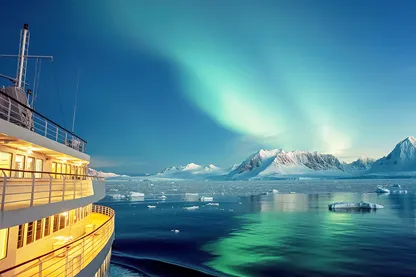
A Northern Lights cruise is an ocean journey over several days that takes place during the time of year when there is an appearance of auroras and passes through the areas of high latitude, which include, mostly, Norway in the Arctic area, as well as Iceland and Greenland, with long nights giving the passengers chances to witness the northern lights on board. In contrast to the evening trips by boat from the port cities like Reykjavik, the Northern Lights cruise lasts from 7 to 15 or more days.
Most of these itineraries sail the Norwegian coast between Bergen and the North Cape or beyond, since northern Norway sits directly beneath the auroral oval — the ring of peak aurora activity that circles the magnetic North Pole. Because the ship keeps moving to a new stretch of coast and a new patch of sky each night, it can dodge cloud cover in a way a fixed hotel base can't, which is the main reason cruising has become such a popular way to chase the lights.
Why Choose a Northern Lights Cruise?
The main benefit of a cruise ship trip is that it’s mobile. It travels underneath the same sky every night, and so if it is cloudy somewhere, the ship will be moving on towards clear skies elsewhere on the coast. In addition, many cruise ships have a built-in system which alerts everyone aboard about the start of an aurora display. This way, even if the guests are having dinner, relaxing in the spa or sleeping, they’ll still receive a notification to go out.
Aside from the aurora itself, a cruise includes the entire vacation experience: fjords, ports of Norway, Sami culture, as well as optional extras such as dog sledding or an overnight stay at an ice hotel. Many companies offer a "Northern Lights Promise" for their cruises, pioneered by Hurtigruten. According to that promise, travelers will get a free cruise in case the lights have not been officially observed during one of their cruises. Although no guarantees can be given here, the financial risks of traveling for the lights will be greatly reduced.
Best Time to See the Northern Lights on a Cruise
Aurora season for Northern Hemisphere cruising runs roughly from late September through early-to-mid April, with the darkest and most reliable nights falling between November and February. Within that window, the equinox months — late September into October, and February into March — often produce noticeably more frequent and active displays, a well-documented seasonal effect tied to how solar wind interacts with Earth's magnetic field at the equinoxes.
2026 has an extra reason to book: the sun is in the closing phase of Solar Cycle 25's maximum, and elevated geomagnetic activity is expected to continue through the year even as the peak itself recedes into the rearview mirror. Some forecasters point to mid-March 2026 in particular — where a fading solar maximum lines up with the spring equinox and a new moon — as one of the best short windows of the decade. On any sailing, the practical sweet spot for actually seeing something is between about 10 p.m. and 2 a.m., and it's worth timing a trip around a new moon where possible, since a bright moon washes out fainter aurora the same way city lights do.
Best Northern Lights Cruise Destinations
Norway is central to the Northern Lights cruise industry due to the fact that its coastline lies under the auroral oval for hundreds of miles. Among the important ports and destinations are:
- Tromso – nicknamed the Arctic capital and the most popular port for viewing the Northern Lights along the Norwegian coast; it boasts the Arctic Cathedral, Polar Museum and proximity to wilderness camps for viewing the Aurora Borealis.
- Alta – known as the “City of the Northern Lights” with clear, dry Arctic air.
- Lofoten Islands – dramatic mountains that rise directly out of the sea and lie under the auroral oval without any light pollution.
- Narvik and North Cape (Nordkapp) – northernmost part of mainland Europe and included in some longer coastal cruises.
- Svalbard – destination for more expeditionary sailings even further north and seeing the Northern Lights amid polar bear and walrus territory.
Iceland is different, in that most departures from Reykjavik are evening boat tours that last just two or three hours into Faxaflói Bay rather than multi-day journeys, although several expedition cruise operators offer longer voyages combining Iceland and Greenland which incorporate aurora viewing at sea with Iceland's glaciers and geothermal landscapes.
Greenland is rarely seen on its own as a cruise destination but appears regularly on longer expeditions in combination with Iceland and even Svalbard.
If you're traveling from the United States and would prefer not to make a transatlantic crossing, there's Alaska too, where auroras can be observed from late August until mid-April. A few cruise lines combine an Inside Passage cruise with a tour of Fairbanks, one of the best places in North America for watching auroras.
Best Northern Lights Cruise Lines
Hurtigruten pioneered the concept of modern Northern Lights cruising with its Norwegian Coastal Express, which has been making sailings on this route for over 130 years, stopping in over 30 ports along the journey from Bergen to Kirkenes, and it is also the company that is known for its "Northern Lights Promise" guarantee. Another Hurtigruten brand, HX (Hurtigruten Expeditions), sends its smaller expedition-type ships on cruises focused on viewing the northern lights from the port of Tromsø, including additional activities like beach bonfire parties, Nordic sauna sessions, and polar dips.
The second major cruise line that operates in this market is Viking Ocean Cruises, offering adults-only "In Search of the Northern Lights" cruise route between London and Bergen (or on to the other ports in the UK and Iberia on extended sailings).
Holland America has leaned further into this niche for 2026, adding dedicated Arctic Journey and Northern Lights sailings — including an overnight stay in Alta — specifically timed to this year's elevated solar activity.
Cunard offers Norway fjord itineraries into the Arctic Circle with a shot at the aurora on its classic ocean liners, trading dedicated aurora-chasing for the line's signature old-world elegance.
Both MSC Cruises and Costa Cruises organize Northern Europe itineraries and Norwegian Fjords itineraries, which venture quite far up into the aurora zone; however, the cruises are not centered on the auroras but are still quite budgetary and family oriented.
Luxury brands like Silversea and Ponant operate smaller ice-capable vessels that go to Svalbard and provide true polar expedition experiences along with aurora watching. Fred. Olsen and P&O Cruises are UK departure cruises which offer convenient access to the Northern Lights from the UK through Northern Norway sailings.
Aurora Expeditions and Quark Expeditions have smaller ships that provide a first-hand adventure to travelers, instead of regular cruises, through the three countries of Norway, Iceland, and Greenland along with aurora photography.
Northern Lights Cruise Prices
Pricing spans a wide range depending on the line, ship size, and season — expect anywhere from around $1,500 per person for a shorter mainstream sailing up to $10,000+ for a luxury small-ship expedition. Fares below are illustrative starting points gathered from current market listings; always check live pricing before booking, since cruise fares shift constantly with demand and promotions.
| Tier | Example Cruise Lines | Typical Starting Price (Per Person, Double Occupancy) |
|---|---|---|
| Value / Mainstream | MSC Cruises, Costa Cruises (Northern Europe Itineraries) | ~$900–$2,000 |
| Classic Norway Coastal | Hurtigruten Coastal Express, P&O Cruises, Fred. Olsen Cruise Lines | ~$1,500–$3,500 |
| Premium / Cultural | Viking Ocean Cruises, Cunard, Holland America Line | ~$2,500–$5,000+ |
| Luxury / Expedition | Silversea Cruises, Ponant, HX Expeditions, Aurora Expeditions, Quark Expeditions | ~$4,000–$10,000+ |
As a real-world anchor: Hurtigruten's 15-day round-trip North Cape sailing from Oslo has been advertised from around $3,034 per person on a mostly all-inclusive basis, while P&O's 12-night round-trip Norway sailings from Southampton have started from roughly $1,527 per person including taxes and port charges — useful reference points for where the "classic coastal" and "value" tiers land in practice.\
By cabin type, the differential follows familiar cruise-pricing logic: inside and oceanview cabins sit at the low end of each line's range, balconies typically add 25–60% over an inside cabin, and suites can run two to three times the entry fare — though on small expedition ships, nearly every cabin already has an outside view or balcony as standard.
By season, the darkest months (November through February) tend to command the highest fares because they're the most in-demand for aurora chasing, while shoulder-season sailings in late September/October and March/April often run noticeably cheaper — and, thanks to the equinox effect, aren't necessarily a worse bet for actually seeing the lights.
What's Included in a Northern Lights Cruise?
The inclusions differ quite considerably depending on the particular line, and so it might be worth looking into that before making price comparisons. Almost all cruises in Northern Lights include cabin accommodation, main dining, entertainment, and on aurora-focused cruise lines some kind of aurora alerts or wake-up call service. Most of them also include the enrichment program for the particular destination such as astronomy about aurora formation, Kp-index education, and lectures about the Vikings/Samis.
When it comes to shore excursions, drinks, gratuities, and internet access, there are differences between ships. The expedition cruise lines and the luxury small ships offer their clients an all-inclusive package that includes shore activities, drinks, and tips. Viking covers the cost of one shore excursion at each stopover, and it also includes internet access. Such lines as MSC and Costa charge for those features individually, as on a regular Caribbean sailing. One detail that should be clarified is that the “Northern Lights promise” or any other guarantee gives you credit for your next trip if you didn’t see them – it’s not a refund, and nothing else.
What Can You Do on a Northern Lights Cruise?
On board, apart from the viewing of auroras, be ready for astronomy and photography lectures (there is even a photo ambassador in some itineraries who will assist you with your shots of the lights), knowledge seminars on wildlife and Sami culture in the Arctic, spa and sauna treatments with ocean views, and dinners made from fresh seafood.
Ashore, your ship’s ports will be visited on the following activities:
- Dog sledding and snowmobiling in frozen environments
- Reindeer sledding and tour to the Sami camp or village
- A night at the ice hotel (for long combined land-and-sea itineraries)
- Zodiac trips in search of whales, walruses, and seals in Svalbard
- Sightseeing tours in Tromsø, Ålesund, or Bergen, including museums and the Arctic Cathedral
- Trains travelings, including the famous Flåm Railway
- Visits to Nordic saunas and polar dives with a beach bonfire included
How to Choose the Best Northern Lights Cruise
Start with itinerary length and route: longer sailings that spend more consecutive nights above the Arctic Circle simply improve your odds, since you're rolling the dice on clear skies more times. Next, decide on ship style — a large classic ship (Cunard, Holland America, MSC, Costa) trades some flexibility for more onboard amenities and a lower price point, while a small expedition ship (HX, Silversea, Ponant, Aurora Expeditions, Quark) can push further into remote Arctic waters and adjust its route around the weather in real time.
Make sure that the cruise line has a policy regarding the aurora, such as Hurtigruten's Northern Lights Promise policy, and pay close attention to its details. Consider carefully what is offered, because an all-inclusive voyage and a standard cruise fare are not directly comparable when added up to include additional costs of shore excursions, beverages, and tips. The type of cabin becomes a relatively unimportant factor for novices, as usually there are aurora notifications sent to the entire ship and most of the ships have their own decks designed specially for the purpose of watching the lights. Finally, consider the convenience of your port of departure: cruise lines offering no-flying options from the UK (such as P&O and Fred. Olsen) will make your travel much easier.
Northern Lights Cruise vs Land Tour (Comparison Table)
| Factor | Northern Lights Cruise | Land-Based Tour |
|---|---|---|
| Odds of a Sighting | Higher — the ship can relocate nightly, avoiding cloud cover across a wider stretch of coastline. | Limited to one location; prolonged bad weather can affect the entire trip. |
| Comfort & Warmth | Warm cabin, restaurants, and lounges between viewings. Aurora alerts let you avoid waiting outside. | Often requires standing outdoors in freezing temperatures for extended periods. |
| Cost | Usually higher per night, but accommodation, meals, and onboard amenities are included. | Generally lower nightly costs, especially with guesthouses or self-drive itineraries. |
| Photography Conditions | Ship movement may affect long-exposure photography; best results often come during shore excursions. | Stable ground provides ideal conditions for tripod-based long-exposure photography. |
| Flexibility | Follows a fixed cruise itinerary and port schedule. | Allows travelers to adjust plans and chase clear skies using weather forecasts. |
| Access to Specific Sights | Excellent for coastal towns, fjords, and scenic shorelines, but limited inland access. | Better for inland attractions such as Lapland, ice hotels, and remote dark-sky reserves. |
| Trip Pacing | Unpack once while the ship travels between destinations. | Requires more driving, hotel changes, and daily planning. |
| Best For | Travelers seeking a comfortable mix of scenic cruising, culture, and Northern Lights viewing. | Travelers focused on aurora photography or visiting specific inland destinations. |
Northern Lights Cruise Pros and Cons
Pros
- Better statistical odds than a fixed location, since the ship can reposition toward clearer skies
- Genuine comfort — warm cabins, full dining, and onboard entertainment between viewing opportunities
- Combines a bucket-list natural phenomenon with fjord scenery, Arctic culture, and (on some lines) genuinely memorable excursions like dog sledding or an ice hotel stay
- Aurora guarantee policies on several lines reduce the financial sting of a no-show
- Works for a wide range of ages and mobility levels compared with rugged land-based aurora chasing
Cons
- No cruise line — guarantee policy or not — can promise you'll actually see the aurora; it remains a genuinely unpredictable natural event
- Typically costs more than a single land-based aurora tour night, especially on premium and luxury lines
- A moving ship makes tripod-based long-exposure photography harder than shooting from stable ground
- Can't laser-target one specific remote, ultra-dark inland location the way a dedicated land trip can
- Norwegian Sea and North Atlantic winter crossings can bring rough seas, which is worth considering for anyone prone to motion sickness
Tips for Seeing the Northern Lights on a Cruise
- Layer up properly. A moisture-wicking thermal base layer, a warm mid-layer (fleece or wool), and a windproof, waterproof outer shell will do more for your comfort than a single heavy coat. Avoid cotton, which holds moisture and gets cold fast.
- Protect your extremities. Insulated, waterproof boots with good grip for icy decks and gangways, a warm hat that covers your ears, and two pairs of gloves — a thick pair for warmth and a thin touchscreen-friendly pair for operating a camera — make a real difference during long waits outside.
- Track conditions yourself. Download an aurora forecast or Kp-index app in addition to relying on the ship's alert system, and keep an eye on the moon phase — new-moon nights offer the darkest, highest-contrast skies.
- Bring your photography equipment. Pack a tripod, additional batteries (since cold weather consumes batteries quickly, make sure that they are stored in an inner pocket), and extra memory cards; familiarize yourself with your camera night settings before departure because it will be difficult to use the long exposure on a moving ship.
- Be flexible in the evening time. If it is possible, don’t plan all nights tightly because often sighting occurs between 10 p.m. and 2 a.m., and it takes place very quickly.
- Be persistent. Your chances to see the phenomenon depend not only on the weather but also on how many days you spend above the Arctic Circle.
- Use the guarantee service. In case you want to play safe, choose the cruise lines which offer you such kind of guarantee as "Northern Lights Promise."
Frequently Asked Questions
When is the best time to go on a Northern Lights cruise?
The Northern Lights season runs from late September through early April, with November to February generally offering the best viewing conditions. October and March also experience strong aurora activity, and increased solar activity during the final stages of Solar Cycle 25 is expected to make the 2026 season especially favorable.
Which cruise line is best for a Northern Lights cruise?
The best cruise line depends on your travel style. Hurtigruten and HX Expeditions specialize in Northern Lights cruises and offer an aurora sighting guarantee. Viking Ocean is ideal for adults seeking enrichment-focused voyages, while Holland America and Cunard provide premium comfort. MSC Cruises and Costa Cruises are excellent options for budget-conscious travelers.
How much does a Northern Lights cruise cost?
Northern Lights cruise prices generally start around $900 to $2,000 per person for mainstream itineraries. Norwegian coastal cruises usually range from $1,500 to $3,500, premium cultural voyages from $2,500 to $5,000+, and luxury or expedition cruises from $4,000 to $10,000+ per person. Prices vary based on the cruise line, cabin category, itinerary length, and travel season.
Can you really see the Northern Lights on a cruise ship?
Yes, many Northern Lights cruises sail through areas beneath the auroral oval, especially along the coast of northern Norway. Cruise ships often dim deck lighting and provide outdoor viewing areas or aurora alerts. However, no cruise line can guarantee a sighting because the Northern Lights depend on solar activity, cloud cover, and weather conditions.
What should you pack for a Northern Lights cruise?
Pack warm layered clothing, including thermal base layers, fleece, a windproof winter jacket, insulated boots, a warm hat, and both lightweight and heavy gloves. Bring a camera, tripod, extra batteries, memory cards, phone charger, waterproof document pouch, and seasickness medication if you're prone to motion sickness.
Are Northern Lights cruises worth it?
For most travelers, yes. Northern Lights cruises combine scenic Arctic landscapes, comfortable accommodations, onboard dining, and better opportunities to seek clear skies compared to staying in one location. While aurora sightings can never be guaranteed, they offer an excellent balance of comfort, sightseeing, and adventure. Dedicated land tours may still be preferable for photographers focused solely on capturing the Northern Lights.


