A family cruise in 2026 costs between $2,800 and $14,000 for a family of four on a 7-night sailing, depending on cruise line, cabin type, and how much you spend on extras. The advertised "from $89/night" rate covers two adults in an interior cabin — real all-in costs run two to four times higher once gratuities, drinks, Wi-Fi, and excursions are added. This guide breaks down exactly what a 2026 family cruise costs, where the hidden fees hide, and how to bring the total down by $1,000+.
Quick answer: Expect $5,400–$8,500 all-in for an average 7-night Caribbean balcony cruise for a family of four — about $192–$304 per person per day.
What's Included in a Cruise Fare (and What Isn't)
Before pricing anything, understand what the headline number actually buys you.
Included in the base fare:
- All meals in the main dining room, buffet, casual venues, and most quick-service spots.
- Kids clubs (typically ages 3–17), pools, waterslides, sports courts, fitness center.
- Broadway-style shows, comedy, live music, family game shows, deck parties.
- Limited room service menu.
Not included — budget for these separately:
- Gratuities ($16–$18 per person per day)
- Alcohol, soda, specialty coffee, fresh-squeezed juice
- Specialty restaurants ($25–$60 per person per meal)
- Shore excursions ($60–$200+ per person per port)
- Wi-Fi ($15–$30 per device per day)
- Spa, salon, photos, casino, arcade
- Babysitting after kids-club hours (~$10–$15 per hour)
2026 Cost Breakdown: Family of 4, 7-Night Caribbean Cruise
This is the most-booked family cruise scenario. Real numbers for 2026:
| Cost Item | Budget Cabin | Standard Balcony | Family Suite |
|---|---|---|---|
| Cruise fare (interior / balcony / suite) | $1,800 | $3,800 | $7,200 |
| Taxes, fees, and port charges | $400 | $500 | $600 |
| Gratuities ($16/pp/day × 4 × 7) | $448 | $448 | $448 |
| Drink package (2 adults) | $0 (skip) | $850 | $1,000 |
| Wi-Fi (1 device) | $120 | $180 | $200 |
| Specialty dining (2 dinners for 4) | $0 | $200 | $300 |
| Shore excursions (3 ports, family of 4) | $400 | $800 | $1,400 |
| Photos / arcade / extras | $100 | $200 | $400 |
| Pre-cruise hotel + flights | $600 | $1,200 | $2,000 |
| Estimated total | $3,868 | $8,178 | $13,548 |
Per person per day (7 nights): Budget = ~$138 · Balcony = ~$292 · Suite = ~$484
The $89/night ad price covers only two adults in an interior cabin, base fare only — not the $5,000+ in real costs once you add gratuities, drinks, Wi-Fi, and excursions for four people.
Cost by Cruise Line (Family of 4, 7-Night Balcony)
The cruise line you pick is the biggest single price lever.
| Cruise Line | Tier | Typical 7-Night Total (Family of 4, Balcony, All-In) |
|---|---|---|
| Carnival Cruise Lines | Mainstream — cheapest | $4,800 – $6,500 |
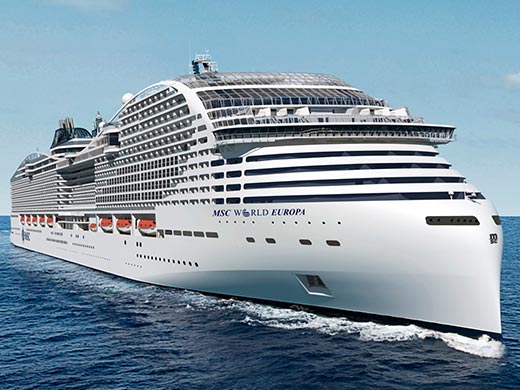
| MSC Cruises | Mainstream — strong value (kids under 12 free) | $5,000 – $6,800 |
| Royal Caribbean | Mainstream — premium ships | $6,500 – $9,200 |
| Norwegian Cruise Line | Mainstream — Freestyle | $6,000 – $8,500 |
| Princess Cruises | Premium | $7,500 – $10,500 |
| Celebrity Cruises | Premium — refined | $8,500 – $12,000 |
| Holland America Line | Premium — older crowd | $7,000 – $10,000 |
| Disney Cruise Line | Premium — character experience | $9,500 – $14,000 |
| Virgin Voyages | Adults-only — not for families | N/A |
| Regent Seven Seas | Luxury — truly all-inclusive | $18,000 – $30,000+ |
→ Read More: Best Cruise Lines for Families
Cost by Cabin Type
Cabin type is the second-biggest lever after cruise line.
| Cabin Type | Sleeps | 7-Night Cost (Family of 4) | Best For |
|---|---|---|---|
| Interior (inside) cabin | 4 | $2,400 – $4,000 | Budget families who plan to be off-cabin all day |
| Oceanview cabin | 4 | $3,200 – $4,800 | Families wanting natural light without paying for a balcony |
| Family balcony cabin | 4 | $3,800 – $5,800 | Most families — the sweet spot |
| Connecting staterooms (2 cabins) | 5–8 | $5,500 – $9,500 | Larger families, teens needing privacy |
| Junior suite / mini-suite | 4–5 | $5,500 – $8,500 | Extra space without full-suite price |
| Family suite | 5–8 | $9,000 – $18,000+ | Multi-gen, RCL Ultimate Family Suite, Disney concierge |
Quick tip: any family of 5+ should plan for connecting cabins or a suite — squeezing five into a quad cabin leaves no luggage space.
→ Read more: How to Find the Best Cabin for a Family Cruise
Cost by Destination (7-Night Family of 4 Average)
| Destination | Typical Total | Why the Price Difference |
|---|---|---|
| Bahamas (3–4 night) | $1,800 – $3,200 | Shortest cruise — entry-level pricing |
| Caribbean | $5,400 – $8,500 | Year-round volume keeps prices competitive |
| Mexican Riviera | $4,800 – $7,500 | West Coast departures, fewer ports |
| Bermuda | $6,000 – $9,000 | East Coast, longer port stays |
| Alaska | $7,500 – $11,500 | Seasonal (May–Sept), premium scenery |
| Mediterranean | $8,000 – $13,000 | Higher-priced lines + flights to Europe |
| Hawaii | $9,500 – $14,000 | Long sailings, fewer ships running it |
Hidden Costs Most Families Forget
| Hidden Cost | What It Adds (Family of 4, 7 Nights) |
|---|---|
| Gratuities (auto-charged) | $448 |
| Drink packages (2 adults) | $700–$1,000 |
| Wi-Fi for the cabin | $120–$300 |
| Specialty restaurants | $200–$500 |
| Shore excursions | $400–$1,200 |
| Photos | $50–$300 |
| Spa / salon | $100–$500 |
| Onboard arcade / casino | $50–$200 |
| Babysitting (after-hours) | $50–$200 |
| Pre-cruise hotel night | $150–$300 |
| Parking at the cruise port | $100–$200 |
| Travel insurance | $200–$500 |
| Total potential hidden cost | $2,500–$5,400 |
Translation: the "from $89/night" headline can balloon into $4,000+ of extras if you say yes to everything.
How to Save $1,000+ on a Family Cruise
These tactics actually move the needle. Use 3–5 of them and you'll save $1,000–$2,500 on a typical 7-night sailing.
- Book a kids-sail-free promotion. Royal Caribbean, MSC, Norwegian, and Carnival all run them seasonally — these waive 3rd and 4th guest fares and save $800–$1,500 on a family of four.
- Skip the drink package if your family won't drink ~6 cocktails or 8 sodas a day per person. Saves $700–$1,000.
- Sail in value weeks — late August, early December, and the first two weeks of January are 30–40% cheaper than peak summer or holiday weeks.
- Book independent shore excursions through ShoreExcursionsGroup or local operators — typically 30–50% cheaper than onboard.
- Pick a 5-night sailing instead of 7 — same ports often, ~28% lower cost.
- Choose Carnival or MSC over Disney or Celebrity — Disney premium adds $3,000+ over Carnival for the same week.
- Pre-book specialty dining and Wi-Fi — onboard prices are 15–25% higher than pre-cruise.
- Book 12+ months ahead for connecting cabins — they sell out and prices climb.
- Use a single device for Wi-Fi and rotate logins — saves $300+ over a multi-device package.
- Drive to your departure port if you're within 12 hours — cuts $1,000–$2,000 in flights and hotels for a family of four.
→ Read more: How to Get a Deal on Family Cruises
Sample 2026 Family Cruise Budgets
Budget build — $3,500 total
- Carnival, 5-night Bahamas, interior cabin, family of 4
- Skip drink package, share 1 Wi-Fi device, 1 specialty dinner, 2 free beach excursions
- Drive to Port Canaveral (no flights)
- ~$125/person/day all-in
Mid-range build — $7,500 total
- Royal Caribbean, 7-night Caribbean, family balcony, family of 4
- 2-adult drink package, 1 device Wi-Fi, 2 specialty dinners, 3 mid-tier excursions
- Pre-cruise hotel night
- ~$268/person/day all-in
Premium build — $13,000 total
- Disney Cruise Line, 7-night Caribbean, deluxe family oceanview, family of 4
- Bottled water + soda packages, character breakfast, 3 premium excursions, photos package
- Flights + 2 nights pre-cruise hotel
- ~$464/person/day all-in
Family Cruise Cost FAQs
How much should I budget for a family of 4 on a cruise?
Plan for $5,400–$8,500 all-in for a typical 7-night Caribbean balcony cruise in 2026. Budget interior cabins on shorter sailings can drop the total to $2,800–$3,500. Premium lines like Disney push the same trip to $10,000–$14,000.
Are family cruises cheaper than all-inclusive resorts?
Often yes. A 7-night family cruise averages $268/person/day all-in, while comparable all-inclusive Caribbean resorts run $300–$450/person/day. The catch: cruises aren't actually all-inclusive — you'll add ~$1,500 in extras a resort would have included.
Do kids really sail free on cruises?
Yes — selectively. Royal Caribbean, MSC, Norwegian, and Carnival each run kids-sail-free promotions that waive 3rd and 4th guest fares on tagged sailings. Savings: $800–$1,500 for a family of four. Check current family cruise deals for live offers.
How much are gratuities on a family cruise?
$16–$18 per person per day, auto-charged to your onboard account. For a family of four on a 7-night cruise, that's $448–$504. Some lines let you pre-pay gratuities at booking; some let you adjust at the guest services desk.
When is the cheapest time to take a family cruise?
Late August, early December, and the first two weeks of January — 30–40% cheaper than peak summer or holiday weeks. Avoid spring break (March), Thanksgiving, Christmas, and New Year if budget is the priority.
Are there extra costs for kids on a cruise?
Most lines charge kids 3rd/4th guest rates (cheaper than adult fares), but you'll pay full gratuities, full Wi-Fi, and full kids-club fees if applicable (most kids clubs are free; nurseries for under-3s are paid hourly). Kids menus are included in main dining.
How far in advance should I book a family cruise to get the best price?
6–9 months ahead for standard cabins; 12+ months for connecting cabins and family suites. Last-minute deals (under 60 days out) exist but inventory is picked-over and you may not get adjacent cabins.
Conclusion
For most families in 2026, a 7-night Caribbean cruise for four costs $5,400–$8,500 all-in — including fare, taxes, gratuities, drinks, Wi-Fi, and three shore excursions. Budget travelers can sail for under $3,500 by choosing Carnival, an interior cabin, and skipping extras. Premium lines like Disney push the same trip past $13,000 once flights and a deluxe stateroom are factored in.
The single biggest variable is the cruise line, followed by the cabin type, followed by how aggressively you say yes to onboard extras. Use 3–5 of the savings tactics above and you'll bring the total down by $1,000–$2,500 with no loss in experience.