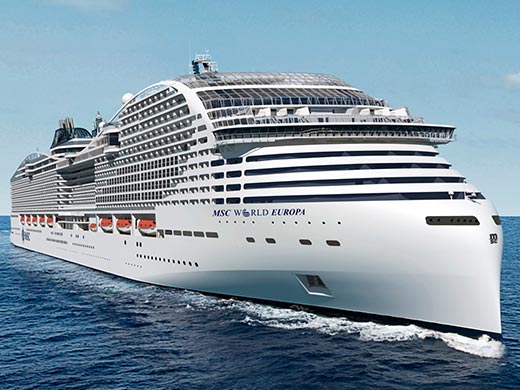
Crete is Greece's largest island, spanning 8,336 km² (3,219 sq mi) with a population of about 636,000. It's roughly 2.3× the size of Euboea — the second-largest Greek island at 3,684 km² — and has 1,046 km of coastline. For cruise passengers, Crete welcomes ships at three ports: Heraklion (the largest), Chania (Souda Bay), and Agios Nikolaos.
Greece has more than 200 inhabited islands scattered across the Aegean and Ionian Seas, and travellers planning a Mediterranean cruise often want to know which one is the biggest before choosing an itinerary. The short answer is Crete — an island so large it's a region in its own right, with mountains over 2,400 metres, 5,000-year-old archaeological sites, and a coastline you couldn't drive end-to-end in less than four hours. Below, we compare the ten largest Greek islands by area, explain what makes Crete a stand-out cruise port, and answer the questions cruisers ask before booking a Greek itinerary in 2026.
Greek Islands Ranked by Size: Top 10
The figures below are land-area measurements in square kilometres, rounded to the nearest whole number. Population estimates are from the 2021 Hellenic Statistical Authority census, with cruise-port columns reflecting itineraries scheduled for the 2026 sailing season.
| Rank | Island | Area (km²) | Population | Main Cruise Port |
|---|---|---|---|---|
| 1 | Crete | 8,336 | ~636,000 | Heraklion, Chania, Agios Nikolaos |
| 2 | Euboea (Evia) | 3,684 | ~191,000 | No major cruise port |
| 3 | Lesbos (Lesvos) | 1,633 | ~83,000 | Mytilene |
| 4 | Rhodes | 1,401 | ~115,000 | Rhodes Town |
| 5 | Chios | 842 | ~51,000 | Chios |
| 6 | Kefalonia | 781 | ~36,000 | Argostoli |
| 7 | Corfu | 593 | ~104,000 | Corfu (Kerkyra) |
| 8 | Lemnos | 478 | ~17,000 | Myrina |
| 9 | Samos | 477 | ~33,000 | Vathy |
| 10 | Naxos | 430 | ~20,000 | Naxos Town |
What stands out from the table is how dominant Crete is — at 8,336 km², it's larger than the next two Greek islands combined. It's also bigger than the Spanish island of Mallorca (3,640 km²) and comparable in size to the U.S. state of Delaware. Despite that scale, Crete is small enough to explore meaningful corners of in a single port day if you plan around one region.
Why Crete Stands Out Beyond Just Size
Size matters for a cruise destination because it dictates how much you can realistically see. Smaller islands like Mykonos or Santorini reward passengers with a tightly curated experience: you walk off the ship, and the highlights are within a kilometre. Crete is the opposite — a full country in miniature, with four distinct prefectures, two mountain ranges, and beaches that range from pink sand at Elafonissi to pebble coves on the south coast.
Three things make Crete punch above its weight on a Mediterranean itinerary:
- Historical density. The Palace of Knossos, where Sir Arthur Evans excavated the Minoan civilisation, is the oldest city in Europe — older than Stonehenge or the pyramids of Giza. Most cruise passengers can reach it in 25 minutes from Heraklion port.
- Climate window. The cruise season here is unusually long. Sailings run from mid-April through early November, with the shoulder months (April, May, October) offering 22–26°C daytime temperatures and far fewer crowds than the Cyclades.
- Food culture. Cretan cuisine is its own UNESCO-recognised Mediterranean diet variant. Dakos, lamb cooked in clay, raki distilled in mountain villages, and graviera cheese are foods you’ll only find done well here.
Crete's Three Cruise Ports Compared
Most cruise lines call at one of three Cretan ports. Each has a distinct character and a different best-use case depending on what passengers want to do during a six-to-ten-hour port stop.
Heraklion (the busiest port)
Heraklion is Crete's capital and where MSC, Royal Caribbean, Norwegian, Celebrity, Costa, and most luxury lines dock. The port sits a 10-minute walk from the Venetian Old Harbour and the Heraklion Archaeological Museum, which holds the most important Minoan artefacts on the planet. Knossos itself is 6 km south — a 15-minute taxi or 25-minute public bus. If you have a single port day on Crete, Heraklion gives you the highest density of must-see history per hour.
Chania (Souda Bay)
Chania is Crete's second city and the prettier of the two main cruise calls. Ships dock at Souda Bay, about 7 km outside town; cruise lines run shuttle buses or you can take a 15-minute taxi. The Old Town's Venetian harbour, lighthouse, and lanes of Ottoman and Venetian architecture are the draw. From Chania you can also reach the pink-sand beach at Elafonissi (a 90-minute drive each way — too long for most six-hour port calls) or the Samaria Gorge in the cruise off-season.
Agios Nikolaos (smaller, character-rich)
Agios Nikolaos is a smaller port mostly used by boutique luxury lines — Silversea, Seabourn, Windstar, and the occasional yacht-style sailing. The town wraps around a circular saltwater lake in the centre, and it's the closest port to Spinalonga (the former leper colony made famous by Victoria Hislop's novel "The Island") and the resort area of Elounda. A port day here suits passengers who've already done Knossos and want a quieter, more local-feeling Crete.
Top Things to Do in Crete on a One-Day Port Stop
For first-time visitors: Knossos + Heraklion Old Town
If it's your first time in Crete, do Knossos in the morning before the heat and the tour buses, then walk the Heraklion Old Harbour and the Archaeological Museum after lunch. Total walking: about 4 km. Budget €20–€30 for taxi each way to Knossos, €20 for the Knossos site entry, and €12 for the museum (or €20 for a combo ticket).
For beach lovers: Elafonissi or Balos
Both of Crete's famous beaches are in the far west and only realistic from Chania port — and only if your ship is in port for 9+ hours. Elafonissi is the pink-sand lagoon; Balos is the turquoise lagoon reachable by a short boat ride from Kissamos. Pre-book a small-group tour or you'll lose two hours each way to traffic.
For history buffs: Spinalonga and Phaistos
From Agios Nikolaos, take the small-boat shuttle to Spinalonga island — a 15-minute crossing, with €10 entry to the fortress ruins. From Heraklion, the Phaistos Disk site (1.6 hours by car) is the second great Minoan palace and far less crowded than Knossos.
For foodies: a mountain-village raki tasting
Many cruise lines now offer a half-day excursion into the foothills of Mount Ida or the White Mountains for a raki distillery visit and a multi-course meal in a family taverna. These run €80–€130 per person and are usually the most-rated shore excursion on Crete cruise reviews.
Practical Tips for Cruise Passengers Visiting Crete
Most ships are in port from 8:00 to 17:00 or 9:00 to 18:00 — call it a 7-to-9-hour window once you've cleared the gangway. Currency is the euro; tipping is light (round up the bill, leave 5–10 percent in restaurants, no obligation in taxis). English is widely spoken in Heraklion and Chania, less so in mountain villages. Sunscreen is essential from May through September — the sun is stronger than the temperature suggests.
Best months to cruise to Crete
May, June, and September. July and August are peak season with crowded sites and 33–38°C heat; October through April are quieter but ship calls thin out as the Mediterranean cruise season winds down.
Greek Islands FAQ: Quick Answers
1. Which is the largest Greek island?
Crete is the largest Greek island, with a land area of 8,336 km² (3,219 sq mi). It is also the fifth-largest island in the entire Mediterranean Sea, after Sicily, Sardinia, Cyprus, and Corsica. Crete sits roughly 160 km south of mainland Greece and is administratively a region rather than a single prefecture.
2. What is the second-largest Greek island?
Euboea (also spelled Evia) is the second-largest Greek island at 3,684 km² — less than half the size of Crete. Despite its size, Euboea is rarely on cruise itineraries because it's connected to mainland Greece by a bridge near Chalkida and tends to be visited by road rather than by ship.
3. What is the biggest Greek island by population?
Crete is also the most populated Greek island, with about 636,000 permanent residents as of the 2021 census. Rhodes (~115,000), Corfu (~104,000), and Lesbos (~83,000) follow. By cruise-tourist volume, Mykonos and Santorini draw far more visitors despite being much smaller.
4. How long does it take to drive across Crete?
Driving the full length of Crete from Kissamos in the west to Sitia in the east takes about 4.5 to 5 hours non-stop, covering roughly 320 km. Most cruise passengers only see one of Crete's four prefectures in a port day — typically Heraklion or Chania — rather than attempting to cross the island.
5. Is Crete bigger than Cyprus or Mallorca?
Crete (8,336 km²) is smaller than Cyprus (9,251 km²) but significantly larger than Mallorca (3,640 km²). Among Mediterranean islands, Crete ranks fifth by area: Sicily, Sardinia, Cyprus, Corsica, then Crete. By coastline, Crete's 1,046 km exceeds Mallorca's 555 km.
6. Which Greek island is best for a first-time cruise?
For first-time cruise passengers to Greece, Santorini and Mykonos remain the most accessible — both are small enough to explore in a single port day without an organised tour. Crete is best for travellers who already know the Cyclades and want depth: longer history, more authentic food, and quieter beaches.
Greek Cruise Itineraries Featuring Crete
Crete appears on most Eastern Mediterranean and Greek Isles itineraries. To browse current sailings and pricing, see all Greece cruises or filter by departure port: cruises from Athens (Piraeus), cruises from Venice, or cruises from Barcelona. For a single-port deep-dive, our Heraklion port guide covers shore-excursion options, taxi pricing, and walking maps.
Cruise lines that regularly call at Crete in 2026 include MSC Cruises, Royal Caribbean, Norwegian Cruise Line, Celebrity Cruises, and luxury operators Silversea and Seabourn.
Related Reading
- Best Time of Year to Cruise the Greek Isles
- Best Greek Island Cruises in 2026-27 | Top Picks
- Best Beaches in Mykonos You Need to Visit
- What is the best time to visit Santorini, Greece?
The Bottom Line
Crete is Greece's largest island by a wide margin — 8,336 km² of mountains, beaches, Minoan archaeology, and food culture, served by three cruise ports that each suit a different kind of port day. If you have a single Greek port call on your 2026 itinerary, Heraklion gives you the most history-per-hour. If you have two, swap in Chania for the Venetian Old Town. And if you've sailed the Greek isles before, Agios Nikolaos and Spinalonga are the quieter, smarter call.