Most cruisers never check the country printed on the back of their ship. You walk up the gangway, find your cabin, and head for dinner. A country name, the Bahamas, Panama, the Netherlands, or Italy, sits below the ship's name at the stern, and few passengers ever notice the detail. You might spot the name only when you pose for a photo next to the hull in port.
The label carries real weight. The nation where a ship registers, called the flag state, sets the safety rules the vessel follows, shapes the taxes the operator pays, and limits the ports your cruise is allowed to visit. Most large cruise ships fly what the industry calls a flag of convenience, a foreign registry chosen for business reasons rather than the home country of the cruise line. Ships flying the United States flag stay rare across the global fleet.
Knowing why your ship flies a foreign flag helps you understand a lot of practical things. The flag explains why your Alaska cruise stops in Canada, why a U.S.-flagged Hawaii sailing costs more than a Caribbean one, and why most of the world's ships sit outside American rules during a crisis. Here is how the practice works, where the idea started, and what the flag means for the cruise you book.
Key Takeaways
- Cruise ship flags of convenience explain why most large vessels use foreign registries for lower costs, taxes, and flexible maritime rules.
- The flag state determines safety standards, legal duties, port access, and regulations followed by your cruise ship during voyages worldwide.
- Passenger Vessel Services Act rules explain why foreign flagged ships stop in countries like Canada during some cruises from America.
- U.S. flagged cruise ships cost more because American crews, shipbuilding, taxes, and maintenance requirements increase expenses for cruise line operators.
- Understanding cruise ship registration helps you choose itineraries, compare prices, and know why ships follow different rules around the world.
How Flags of Convenience Began?
The practice traces back to Prohibition. Starting in 1920, U.S. law banned the sale of alcohol, and passenger liners registered in the United States lost the right to serve drinks on board. Foreign ships kept pouring drinks for their guests, and American operators lost business to them.
To get around the rule, U.S. steamship lines began registering their ships in Panama. The first two American vessels switched to Panamanian registry in 1922. The benefits grew beyond alcohol. Operators found cheaper labor, lighter regulation, and a smaller tax bill under the foreign flag.
When Prohibition ended in 1933, many operators kept their Panamanian registry rather than switching back. The habit spread across the shipping world and became standard practice. Roughly a century later, most cruise ships still fly foreign flags, and a global health crisis, rather than a ban on alcohol, exposed the problems the arrangement creates for passengers and crew.
Where do cruise ships register?
A handful of countries host most of the world's cruise and cargo ships. The Bahamas, Panama, Bermuda, Malta, and the Marshall Islands appear on the sterns of vessels run by companies-based thousands of miles away. Each registry offers a mix of lower taxes, lighter labor rules, faster paperwork, and, in some cases, the right to perform certain functions onboard.
The flag does not always match the cruise line you booked with. A Miami-based company often registers a ship in the Bahamas. A brand with deep European roots might pick a European flag. When you read about the port of registry under the ship's name, you learn where the vessel is legally based, not where the head office sits or where the ship sails most of the year.
These open registries accept ships from any nation and compete with one another on fees and rules. A country with a small population and a long coastline earns steady income from registration fees and annual charges, even with a tiny home fleet. For the cruise line, the appeal lies in predictable costs, and a rulebook built around the needs of large international fleets.
Why the Flag Shapes Your Itinerary?
One U.S. law has the biggest direct effect on your cruise. The Passenger Vessel Services Act, known as the PVSA, passed in 1920 and governs the movement of passengers between U.S. ports. Under the PVSA, a ship is allowed to carry passengers from one American port to another only if the ship flies the U.S. flag. A foreign-flagged ship has to break up the trip with a stop at a distant foreign port.
Customs and Border Protection describes the rule in plain terms. The PVSA bars commercial vessels such as cruise ships from letting passengers board at one U.S. port and leave the ship at a different U.S. port. Lawmakers wrote the act when the United States ran a strong merchant and passenger fleet, and the rule aimed to protect American companies from foreign competition.
For you, the law explains a long list of itinerary quirks. A cruise from Boston up to Maine must call on Bermuda or Canada before heading home. A cruise to Alaska leaving from Seattle must stop in Canada. Caribbean sailing must visit a Caribbean island. A round-trip cruise leaving from and returning to the same U.S. port, called a closed-loop cruise, still needs a distant foreign stop when the ship flies a foreign flag. The foreign port is not on schedule for sightseeing alone. The stop keeps the whole cruise legal under the PVSA.
A small group of U.S.-flagged lines escapes the rule. American Cruise Lines and UnCruise Adventures run smaller ships built in the United States, so their sailings skip the foreign-port requirement. In the 2021 season, after Canada closed its ports to large ships, these small U.S.-flagged lines were among the few able to run Alaska routes at all.
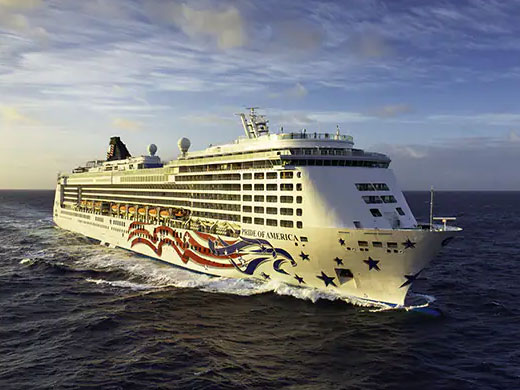
Hawaii shows the rules clearly. A foreign-flagged ship sailing a round-trip loop within the Hawaiian Islands would break the PVSA, so most Hawaii cruises from the U.S. mainland add a stop in Mexico or run as one leg of a longer Pacific route. The largest ship able to sail Hawaii on a closed island loop is the U.S.-flagged Pride of America, built and staffed to meet the law.
The Perception Problem
A foreign flag also changes how governments treat ships in an emergency. Early in the coronavirus pandemic, Florida refused to let ships run by Holland America Line and Princess Cruises dock in the state, pointing to their foreign flags. Both lines carried American passengers and had based their ships in Florida for several winters in a row.
The standoff started a public argument over taxes. American-based cruise companies register their ships abroad and pay little U.S. corporate tax as a result. During the pandemic, members of Congress pointed to the foreign flags and the overseas tax setup as reasons to keep federal bailout money away from the cruise industry.
The flags raised another hard question. When a ship runs into trouble, the flag nation, rather than the home country, carries the duty to help. The U.S. Coast Guard told cruise ships with COVID-19 cases to stay away from American ports and seek aid elsewhere, even though most of those ships based their daily operations in the United States.
Why Operators Cannot Simply Reflag in the United States?
If foreign flags create these problems, why not move the ships to the U.S. registry? The answer comes down to two strict legal tests, and large cruise ships fail both.
First, a U.S.-flagged ship must be built entirely in the United States. No American shipyard has built a large oceangoing passenger ship since 1958, when the S.S. Argentina launched from the Ingalls Shipyard in Pascagoula, Mississippi. American yards still build ferries, riverboats, coastal ships, and commercial vessels with great skill. A modern megaship is a different kind of project, and the shipyards in Germany, Italy, France, and Finland hold the experience and the assembly lines for the work.
U.S. shipbuilding standards rank high, but they do not outrank the rules set by the International Maritime Organization, the London-based body governing global shipping. The IMO wrote the Safety of Life at Sea standards used across the world fleet. A foreign-built ship meeting IMO and SOLAS rules already clears a recognized safety bar, so the build-at-home requirement adds cost without adding safety.
Second, a U.S.-flagged ship has to sail with a mostly American crew. Norwegian Cruise Line ran into this exact problem in 2004 while building the company's American-flagged Hawaii operation. Early sailings of the Pride of Aloha, now the Norwegian Sky, drew poor service reviews, and some crew members left the ship after the vessel reached Honolulu. American wages run higher than the international crew costs cruise lines pay elsewhere, so fares on a U.S.-flagged ship rise. Compare the price of a Pride of America Hawaii cruise with a foreign-flagged sailing and the gap shows clearly.
The Cost of Flying the U.S. Flag
Labor is one piece of the bill. Everything else about a U.S.-flagged ship costs more too. A 2001 report in the Baltimore Sun found an American-flagged cargo ship cost about 4 million dollars more per year to run than a foreign-flagged one, and two decades of inflation have widened the gap since then.
The report listed the reasons in order. Payroll runs higher. Taxes run higher. Insurance costs more. Ships have to meet the Coast Guard's exact standards. Repairs have to happen in costly American shipyards.
The drydock rule creates the biggest problem. A U.S.-flagged ship has to return to an American shipyard for servicing, refits, and major repairs. Operators face penalties for repairs done at sea and penalties for drydock work done outside the United States. A ship based near American shores handles this with little trouble. A ship working a European season loses time, money, and schedule room sailing all the way back to the United States for routine drydock work.
Some Flags Reflect Heritage, Not Savings
Critics often frame foreign flags as a tax dodge and nothing more, yet cost does not drive every choice. Holland America Line registers the fleet in the Netherlands, partly because the company started there and still employs many Dutch captains and senior officers. Every Holland America ship list Rotterdam as the port of registry.
Viking flags the ocean fleet in Norway, with the home port of Bergen shown below each ship's name at the stern. When Viking Star debuted in 2015, the ship became the first passenger vessel registered on the Norwegian International Ship Register in a decade.
Cunard Line gave up the Southampton, U.K. registry in 2011 and moved to Hamilton, Bermuda, for one practical reason. The Bermuda flag lets captains perform weddings on board. The switch ended 171 years of British registration for the line and brought a feature guests had asked for.
What Foreign Flags Mean for You
Foreign flags are staying. Without a federal program paying companies to build large passenger ships at home, the economics point out the same way they have for a century, and habits built over a hundred years will not reverse in a few seasons.
Unless Congress rewrites the PVSA, the foreign-port rule stays too. The rule keeps many cruise lines from adding more U.S. ports of call, because every domestic-heavy route still has to fit in a distant foreign stop to satisfy cabotage law.
The pandemic showed an odd gap in how the United States treats different kinds of travel. Airlines fly foreign-built planes into U.S. airports without question. Trains and trucks run regardless of where the equipment was built or who operates them. Ships face a stricter standard than any of them.
A few practical points follow for your next booking. Expect almost every large-ship cruise from a U.S. port to include at least one foreign stop, so plan for a valid passport and the extra port time. If you want an all-American route with no foreign call, look at the small U.S.-flagged lines such as American Cruise Lines or UnCruise Adventures, and expect to pay more for the smaller ship and the American crew. If you book an Alaska sailing and want to know whether your ship has to stop in Canada, check the flag. A foreign-flagged ship will make the stop, and a U.S.-flagged one will not.
The country's name at the stern looks like a small detail. The choice behind the flag shapes where your ship sails, how much you pay, and which rules apply onboard, long after you stop noticing the country's name above the deck.